What Pomegranates Actually Promise
The first sip of pomegranate juice can seem to justify its reputation: tart, vivid, and noticeably different from ordinary fruit drinks. That impression, however, is not the same as a guaranteed health effect. Pomegranates contain compounds that researchers have linked with possible support for blood vessel function, inflammation balance, and antioxidant activity, but those findings do not mean the fruit prevents illness or produces a dramatic change in how someone feels.
The practical details matter more than the slogan. A handful of arils, a glass of juice, and a concentrated supplement are not interchangeable choices. Their fiber, sugar, calories, processing, and serving sizes can vary considerably, while the rest of the diet may influence what benefit is actually noticeable. Taste and cost can also make daily use inconsistent. Pomegranates may fit well into an otherwise balanced eating pattern, but their promise is better understood as potential support—not a shortcut around ordinary nutrition, activity, or medical care.
The Nutrients Behind Their Reputation
What stands out on the nutrition label is not one miracle ingredient, but a combination of plant compounds. Pomegranate arils provide fiber, potassium, vitamin C, and vitamin K, along with polyphenols that contribute to the fruit’s deep color and tart flavor. These compounds are often discussed as antioxidants, although that label can make the benefit sound more direct than it is. The body’s response depends on absorption, metabolism, serving size, and the person’s overall eating pattern.
That distinction becomes less obvious when the fruit is consumed as juice. Pressing removes most of the fiber, while a relatively small glass can contain the sugars from several fruit portions. Bottled products may also vary in concentration or include added sweeteners, making comparisons difficult. Supplements create another layer of uncertainty because their doses and formulations may not resemble ordinary food. The nutrients help explain why pomegranates attract attention, but they do not guarantee that a costly or inconvenient version will provide more noticeable value than regularly eating a varied selection of fruits.
Heart Benefits Look Promising but Limited
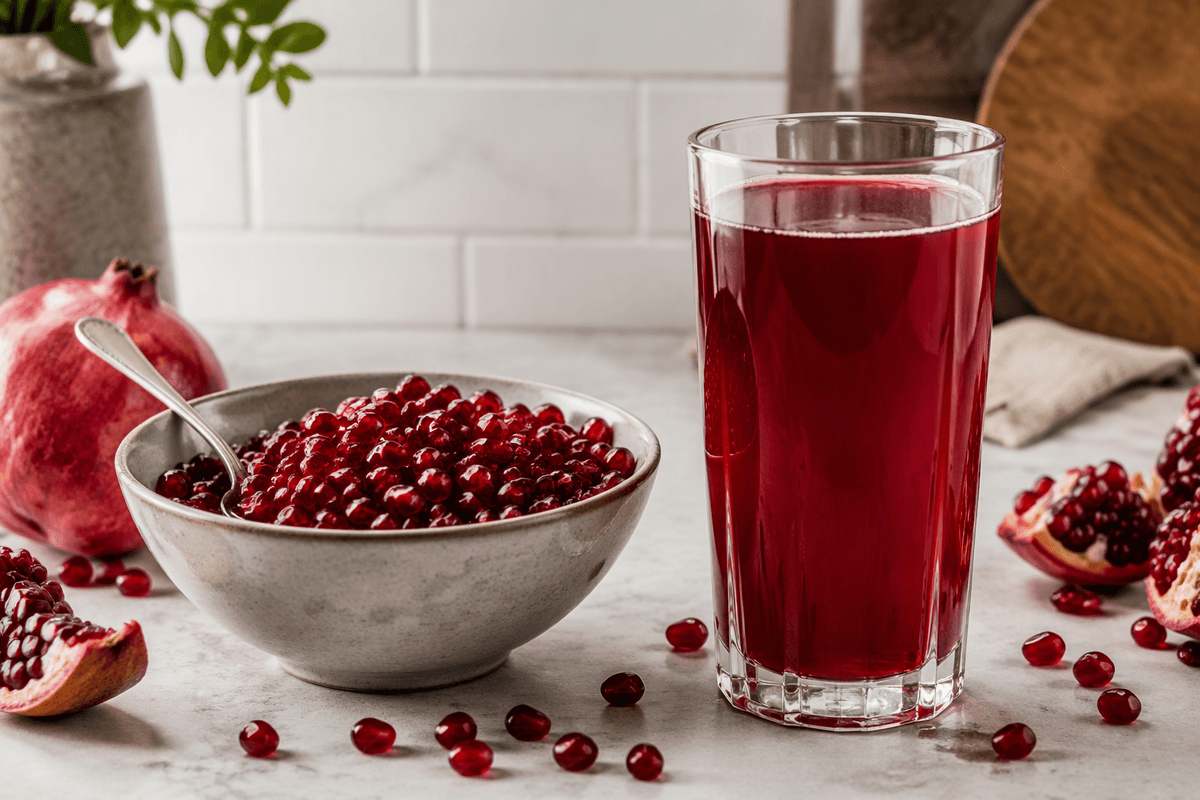
The blood pressure reading may shift slightly after someone begins drinking pomegranate juice, which can make the heart-health claim feel convincing. Some studies have reported modest improvements in blood pressure or blood vessel function, but the results are not uniform, and the studies often involve different products, amounts, and time periods. A change that appears in a controlled study may be difficult to notice during ordinary eating, especially when sleep, activity, sodium intake, and medications are also affecting the same measures.
The form consumed creates another limitation. Whole arils add fiber and require a slower, more deliberate serving, while juice is easier to overconsume and may contribute substantial sugar without the same fullness. A sweetened drink can weaken the practical value further, even if the label still emphasizes pomegranate. These foods may support a heart-conscious eating pattern, but they should not be treated as a replacement for prescribed treatment or as a reliable way to offset an otherwise unbalanced diet. The most reasonable expectation is a possible, modest contribution rather than a dramatic cardiovascular change.
Inflammation Claims Need More Context
After hearing that pomegranates may “fight inflammation,” it is easy to expect less stiffness, soreness, or fatigue within days. In practice, inflammation is not one simple feeling or measurement. Research may examine blood markers, exercise recovery, or specific health conditions, and results can differ depending on the product, dose, and study length. A change in a laboratory marker may also occur without a noticeable improvement in everyday comfort.
The surrounding meal matters as much as the fruit itself. Whole arils eaten with yogurt or a meal contribute fiber and may replace a less nutritious snack, while sweetened juice can add considerable sugar without changing the rest of the diet. If someone drinks it alongside an otherwise highly processed eating pattern, the overall effect may be difficult to separate from everything else being consumed. Pomegranates can reasonably provide polyphenols within a varied diet, but “anti-inflammatory” is better treated as a possible contribution than a predictable outcome. Personal responses may also be inconsistent, especially when servings change from day to day.
Juice, Whole Fruit, and Supplements Differ

A glass of juice can disappear before fullness has time to register, especially when it is poured alongside breakfast or treated like a routine wellness drink. Whole arils usually take longer to eat and provide fiber, which may make the serving feel more substantial. Juice is not automatically a poor choice, but its sugar and calorie content can become easy to overlook, particularly when the product is sweetened or served in a large glass. The tart flavor may also lead people to add sweeteners, changing the nutritional trade-off again.
Supplements create a different kind of uncertainty. Extracts may provide concentrated amounts of selected compounds, but they do not supply the fiber, water, or broader nutrient mix found in the fruit. Product strength and ingredient quality can vary, and a higher dose does not necessarily translate into a stronger everyday benefit. For most people, the more useful comparison is not whether one form is “best,” but whether it fits consistently into the diet without adding unnecessary sugar, expense, or discomfort. A modest portion of whole fruit may be less dramatic, yet easier to judge in context.
When a Healthy Choice Feels Uncomfortable
Sometimes the first sign that pomegranate does not fit comfortably is not a medical concern but a practical one: stomach rumbling, loose stools, or a lingering feeling of fullness after a large serving. The fruit’s fiber and tartness may be bothersome for some people, while juice can feel easier to drink but less satisfying. Concentrated products may create different sensations again, especially when taken in amounts that exceed what someone would normally eat as fruit.
Fresh pomegranates take time to open, arils may be expensive, and juice can add sugar without replacing another part of the diet. People may also mistake a strong flavor, temporary digestive change, or increased bathroom visits for evidence that the product is “working.” If the pattern continues, reducing the portion or choosing another fruit may offer a more useful comparison. A healthy food does not have to be forced into a routine when it causes inconvenience, uncertainty, or avoidable discomfort.
A More Proportionate View of Benefits
After weighing the taste, cost, sugar, and effort, pomegranate may look less like a special remedy and more like one useful food among many. Whole arils can provide fiber and plant compounds; unsweetened juice may offer some of the same compounds in a more convenient form; supplements are harder to judge because their doses and quality vary. None of these options guarantees a noticeable change, and benefits may be modest enough to disappear against larger influences such as overall diet, activity, sleep, or prescribed treatment.
A practical choice therefore depends on what can be eaten comfortably and consistently. If a small serving of whole fruit replaces a less nutritious snack, it may be a sensible addition. If juice adds extra sugar without replacing anything, its value is less clear. The same principle applies to cost and inconvenience: a food that is rarely used may matter less than an ordinary fruit eaten regularly. Pomegranates can contribute to a varied eating pattern, but their strongest promise is probably proportionate—interesting potential, limited certainty, and no need to force the habit.