Recognize When Pressure Dressing Is the Right Tool
The first surprise is often how quickly a small cut can make everything look worse. Blood spreads across skin, fabric, or a paper towel, so a wound may seem more serious than it is at first glance. A pressure dressing is most useful when bleeding is more than a brief surface ooze but may respond to steady, uninterrupted pressure over the spot.
The important pattern is consistency, not repeatedly lifting the covering to see whether it has stopped. A loosely held cloth can absorb blood without doing much to slow it, while firm, even pressure helps the body form a clot. There are limits: blood that spurts, rapidly soaks through layers, or keeps flowing after sustained direct pressure should not be treated as a routine dressing problem. Numbness, worsening pain, or skin beyond the wrap becoming pale, cool, or blue also changes the situation. Those signs can mean the pressure is wrong—or that the injury needs urgent care rather than another layer of bandage.
Start With Direct Pressure Before Building Layers
It can feel almost impossible not to peek after a few seconds, especially when blood has marked the cloth. Yet the first useful step is usually simpler than building a thick wrap: place a clean pad or cloth directly over the wound and press down firmly and steadily. The aim is not to squeeze the whole arm or finger, but to hold pressure where the bleeding is coming from.
Stopping to lift the material often restarts the uncertainty. A forming clot can be disturbed before it has had much chance to hold, making the wound appear as though nothing has changed. Keep the pressure continuous rather than checking repeatedly; direct pressure is the main first-aid measure for external bleeding. If blood is flowing forcefully, pooling, or continuing through sustained pressure, do not keep treating it as a minor cut. Get urgent help, particularly if the person feels faint or the injury is deep, caused by a puncture, or involves a hand, face, or joint.
Choose Clean Materials That Spread Force Evenly
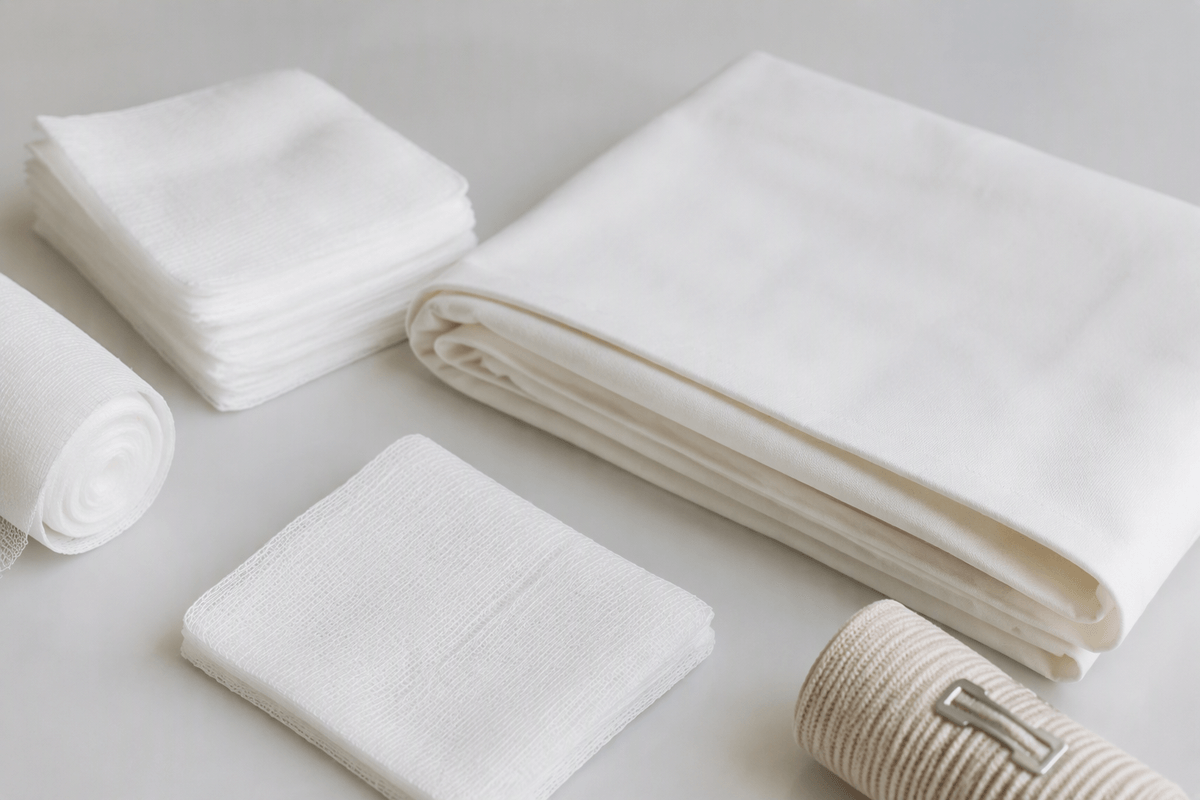
A thin tissue or a crumpled paper towel can seem adequate until the pressure lands unevenly. It may absorb blood, but gaps, ridges, or a small hard fold can leave the bleeding point without steady contact. A clean gauze pad is useful because it lies flat; if none is available, a clean folded cloth can work better than a loose, shifting layer. The material does not need to be elaborate. It needs to cover the area and give your hand, then the wrap, a broad surface to press against.
Clean materials also reduce one distraction: wondering whether dirt from a used towel, clothing, or work surface has been pressed into the wound. If gloves are available, use them, but do not delay firm pressure while searching for perfect supplies. Avoid fluffy material that sheds fibers or anything so small that it concentrates force on one painful spot. Gauze or a clean cloth is generally appropriate for applying steady pressure to an external wound.
Position the Pad Directly Over the Bleeding Site
Once the pad is in place, its exact location matters more than making the whole area look neatly covered. It is easy to center it over the largest smear of blood rather than the point where blood is actually emerging. If the cut is visible, settle the thickest, flattest part of the pad directly on that spot before holding it still. A pad that sits partly beside the wound may catch blood but offer little useful pressure where it is needed.
Blood can also travel along a finger, crease, or patch of hair, making the source harder to judge. Do not keep shifting the pad to chase every stain; a brief adjustment to cover the bleeding point is different from repeated checking. The Red Cross advises placing the dressing on the wound and applying direct pressure. If the source cannot be covered, bleeding continues forcefully, or the wound appears deep or widely open, the situation may need urgent assessment rather than a more carefully placed dressing.
Wrap Firmly Without Cutting Off Circulation
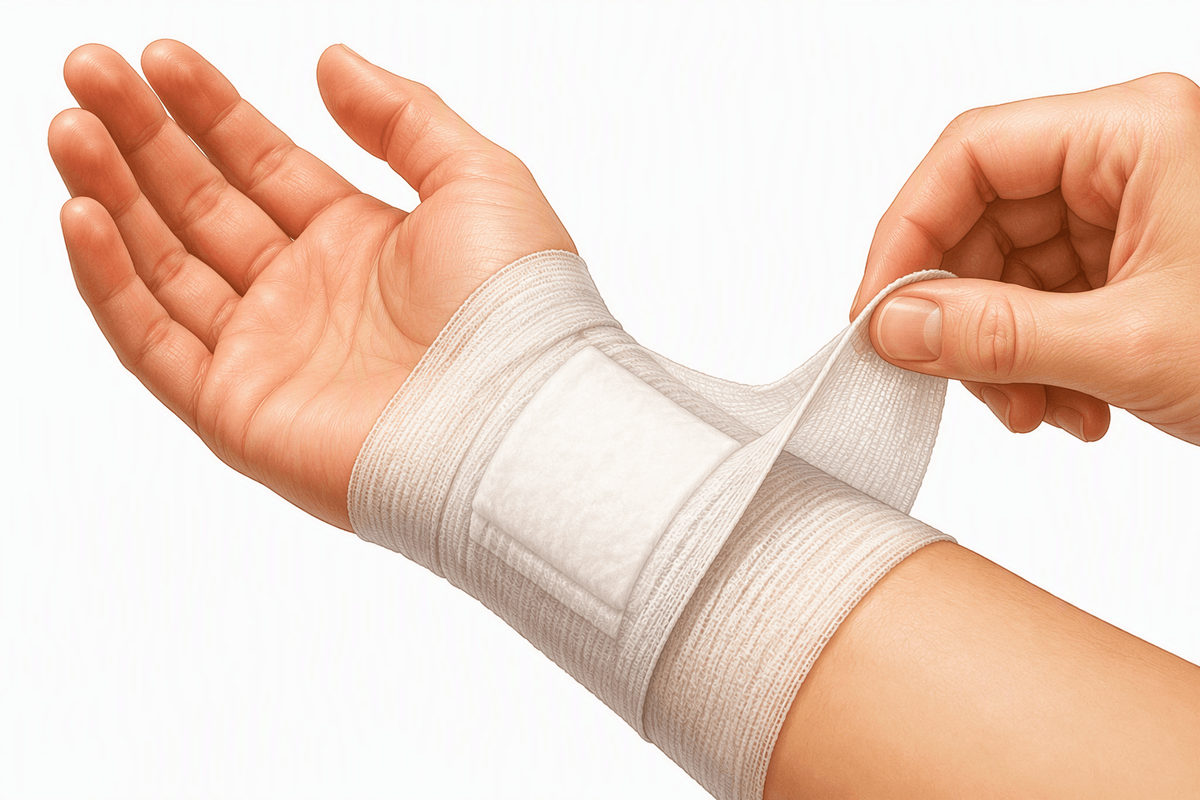
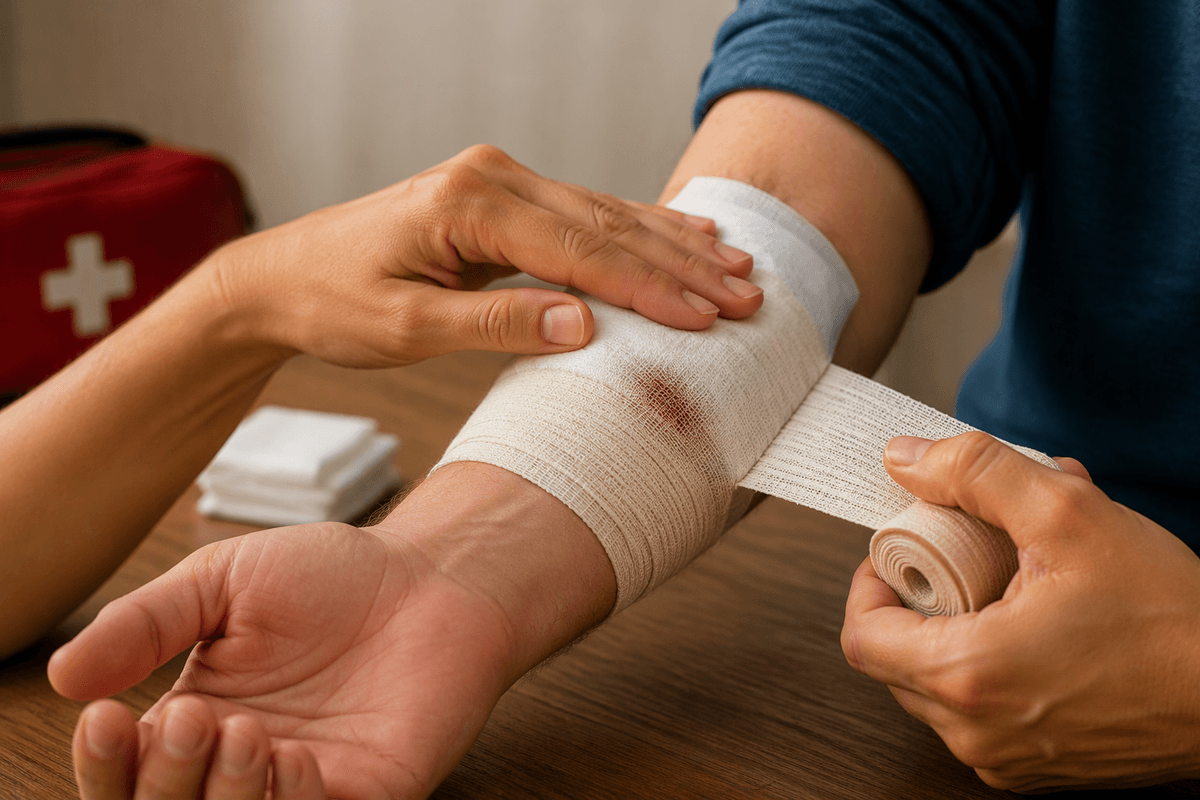
The wrap can look reassuringly secure and still create a different problem if each turn pulls tighter than the last. After the pad is held over the wound, use a bandage, rolled gauze, or clean strip of cloth to keep it from shifting. It should feel firm enough to maintain contact with the pad during normal movement, not like a tight cord around a finger, hand, arm, or leg. Uneven wrapping can also make one edge dig into the skin while the pad itself barely presses the wound.
There is some uncertainty here because swelling, movement, and pain can change how the wrap feels over the next several minutes. Check the skin beyond the dressing rather than lifting the pad: fingers or toes should remain warm and their usual color, without increasing tingling, numbness, or throbbing pain. If they become pale, blue, cool, or unusually numb, loosen the outer wrap enough to restore comfort and circulation while keeping the pad in place. A dressing that rapidly soaks through or cannot stay secure without severe tightness is not behaving like a routine wound cover.
Add Layers Instead of Removing Soaked Gauze
Seeing red spread through the gauze can trigger the urge to pull everything off and start over. That usually interrupts the pressure already working at the wound and may disturb a clot that is beginning to hold. Leave the original pad in place. If blood seeps through, place a fresh clean pad or folded cloth over it, then continue steady pressure and secure the added layer if needed.
A thicker dressing is not automatically a sign that the wound is under control. What matters is whether the bleeding slows rather than continuing to soak through each new layer. Avoid peeling back the lower gauze just to inspect it; the visible stain can look alarming even when the flow has eased. If blood quickly saturates added layers, runs around the dressing, or keeps coming despite firm sustained pressure, treat that as a reason for urgent assessment rather than repeatedly rebuilding the bandage.
Reassess Safely and Know When Care Cannot Wait
After the wrap has been left alone for a while, the outside of it may still look more alarming than the wound feels. Check what you can without peeling back the pad: whether blood is continuing to spread quickly, whether the dressing remains in place, and whether the skin beyond it stays warm, normally colored, and able to move and feel as usual. A small stain is different from fresh blood rapidly saturating the layers.
There is a point where waiting for a dressing to “catch up” is not the safer choice. Call emergency services for blood that spurts or flows continuously, bleeding that does not stop with firm sustained pressure, or signs such as faintness, confusion, weakness, or unusual sleepiness. Deep, gaping wounds, injuries with an embedded object, and wounds involving the neck, chest, abdomen, groin, face, hand, or joint also deserve prompt medical assessment. Once the pattern shifts from slowing to ongoing loss, the priority is getting help while keeping steady pressure in place.