Rainwater Changes More Than Water Clarity
The water may look merely darker after a downpour, with leaves along the shore and a brownish plume near a creek mouth. It is easy to treat that as a visibility problem. But rain also moves whatever has collected on streets, yards, trails, and nearby land into the same place people swim. In some areas, fast runoff can carry sediment, animal waste, oil, litter, or material from overwhelmed drainage systems toward a beach, lake, or river.
That does not mean every swim after rain carries the same concern. A protected lake, an open ocean beach, and a slow river can change differently, and conditions may improve or shift as water moves through. Still, murky water, fresh flow from a storm drain or outfall, and a newly posted advisory are useful signs that the water has changed in ways the eye cannot fully measure. Checking local notices is especially relevant after heavy rain.
Runoff Carries Contaminants Into Swimming Areas
A storm drain emptying near the shoreline can look like part of the scenery until rain turns it into a fast-moving stream. That flow does not start at the beach. It may have traveled over pavement, lawns, farm areas, or overflowing sewer systems, picking up bacteria, waste, chemicals, and debris along the way. In a river, the change may arrive from miles upstream rather than from the bank beside the swimming spot.
The runoff does not spread evenly. A strong current may carry it past one area while leaving another plume near a creek mouth, marina, or outfall. Waves and wind can shift where that material collects, and a lake that seems calm may hold it near shore longer than expected. Water can also look better before conditions have fully settled. That uncertainty is why a recent downpour, especially when paired with visible drainage flow or an advisory, can matter more than the rain itself.
Germs Create the Most Immediate Health Concern
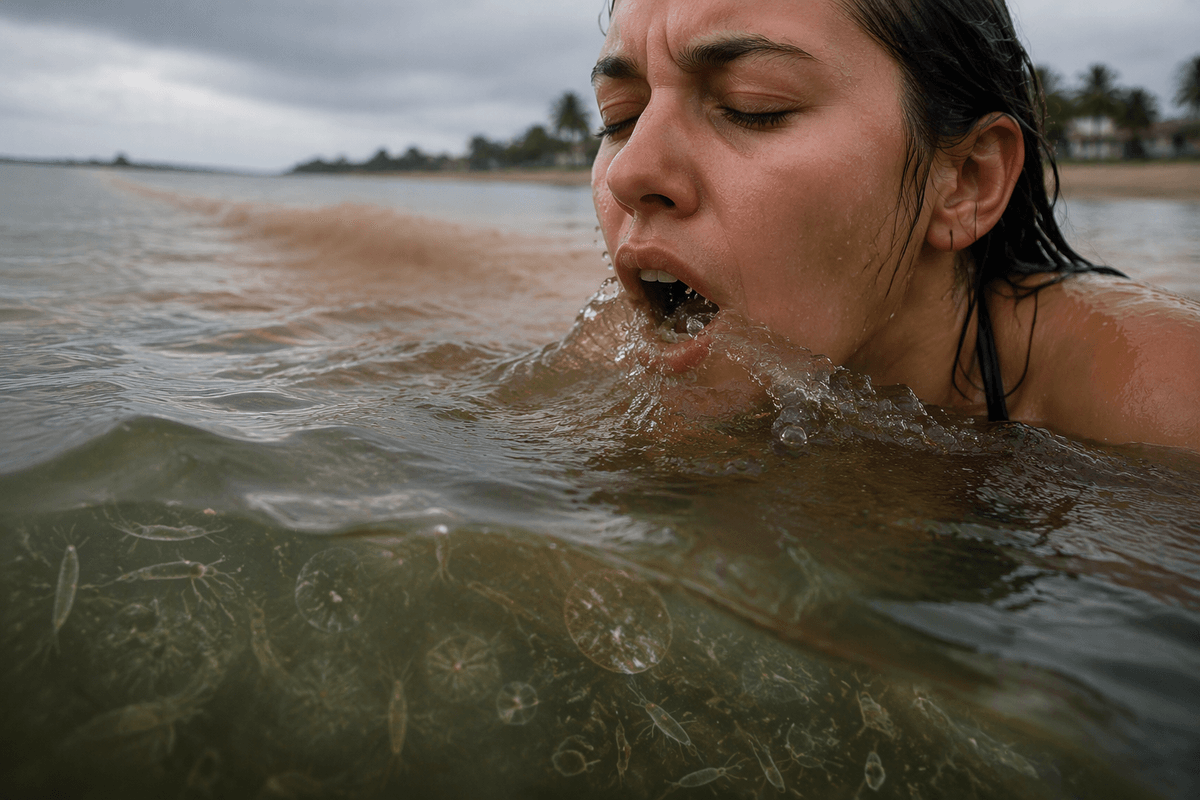
A mouthful of water can seem like part of swimming, especially when waves, children, or a sudden dip make it hard to avoid. After heavy rain, though, germs carried in human or animal waste are often the most immediate concern because contaminated water may be swallowed, get into the eyes or ears, or contact the skin. Stomach upset and diarrhea are common outcomes linked with contaminated recreational water, while rashes and ear irritation can also occur.
The germs are not something swimmers can see. A brown plume may signal runoff, but water can look fairly normal while conditions remain changed. The amount of exposure also differs: someone floating near shore has less contact than a child repeatedly dunking, swallowing water, and playing beside a drain outlet. That is why advisories matter after storms; they reflect local testing or conditions rather than a judgment based on appearance alone.
Clear Water Can Create False Reassurance
By the next morning, the surface may have lost its muddy streaks and the beach may look inviting again. That visual change can create a misleading sense that the storm’s effects are over. Sediment often settles or moves away faster than some contaminants do, and water that appears clear may still have been affected by runoff from upstream, nearby drains, or an overflow farther along the shore.
This is where waiting for the water to “look normal” has a practical limit. Sunlight, waves, and currents can change the appearance quickly, while local testing, posted closures, and the amount of time since the rain offer different pieces of information. Clear water is not automatically unsafe, and cloudy water is not a measure of risk by itself. But after a heavy downpour, appearance works best as one clue among several—not as proof that the conditions have returned to normal.
Flooding Raises Risks Beyond Waterborne Infection
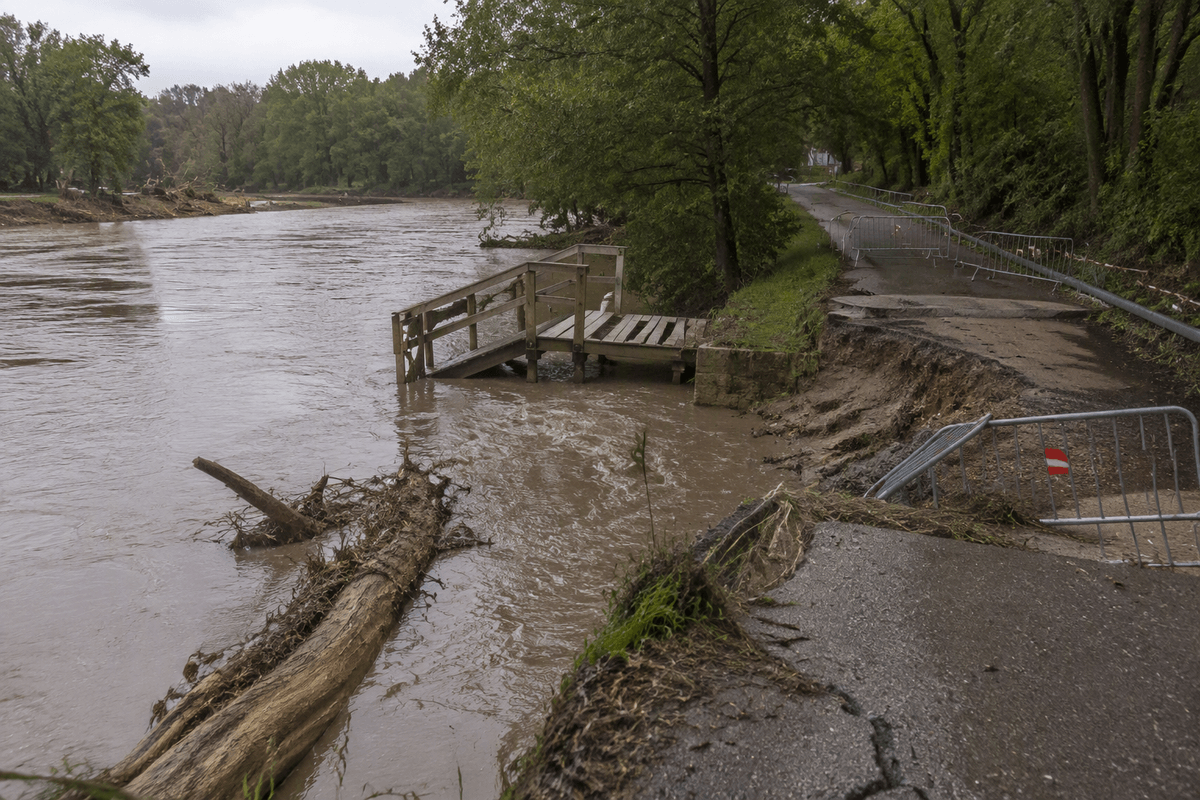
The difference becomes more obvious when the water has crossed the shoreline rather than simply risen near it. Flooding can leave a swimming area with hazards that are not mainly about swallowing contaminated water: sharp debris may be hidden below the surface, currents can be stronger than they appear, and damaged roads, docks, or banks may make getting in and out less predictable. In some places, floodwater can also carry chemicals, fuel, or sewage from areas that normally sit well away from the beach.
That distinction matters because a familiar river access point may no longer behave like a usual swimming spot. A shallow-looking stretch can move quickly after a storm, while floating branches or submerged objects make footing uncertain. Flood notices, closed access roads, and barriers are therefore more than inconveniences; they may reflect risks that water-quality testing alone does not capture.
Small Breaks in Skin Change the Equation
A scrape from a rock, a healing blister, or a fresh shaving nick may not seem important when the water is calm. After heavy rain or flooding, however, a break in the skin creates another route for germs in contaminated water to make contact with the body. The concern is not limited to obvious cuts; recent piercings, tattooed skin that is still healing, and surgical wounds can also be more vulnerable than intact skin.
This does not mean a tiny mark makes every beach or river swim dangerous. The difficulty is that it adds to the uncertainty when runoff, murky water, nearby drainage flow, or an advisory already suggests changed conditions. Covering a minor wound may help in some settings, but a bandage can loosen during active swimming and is not a substitute for avoiding questionable water. In salt or brackish water, open wounds deserve particular caution.
Local Conditions Matter More Than a Single Rule
Two beaches a few miles apart can respond very differently to the same storm. One may have open water and strong circulation, while the other sits beside a creek, storm drain, marina, or low-lying neighborhood where runoff collects. A river can be affected by rain that fell far upstream, sometimes after the sky above the swimming area has already cleared. Even the direction of wind and current can change which stretch of shore receives the most debris or contaminated flow.
That is why a fixed rule, such as waiting a certain number of days after every rainfall, cannot account for every situation. Local advisories, recent rainfall intensity, visible discharge, flooding, and the character of the waterway provide a more useful picture together. If a familiar spot looks or behaves differently after a storm, that change is worth noticing even when no closure is posted. The safest judgment is often less about whether it rained and more about where that rain likely traveled before it reached the water.