What Organic Eating Can and Cannot Change
The difference may show up at the grocery receipt before it shows up anywhere in the body. Choosing organic foods can reduce exposure to certain pesticide residues, especially when they replace conventionally grown items treated with particular chemicals. That is a meaningful change in exposure, but it is not the same as proving a lower cancer risk. Residue levels vary, farming practices differ, and exposure also comes from water, workplaces, household products, and the environment.
The harder part is separating one food choice from everything else happening over years. Cancer risk reflects a mix of age, genetics, body weight, physical activity, infections, and overall eating patterns. Organic labels do not measure those factors, nor do they guarantee that a diet is high in fiber, low in processed meat, or otherwise protective. For some people, organic purchases may be a practical way to reduce a specific exposure. Their limits become clearer when the label is treated as a direct forecast of future health rather than one small part of a much larger pattern.
Why Exposure Reduction Does Not Equal Risk Elimination

At first, the change can seem more decisive than it really is. A person switches to organic produce, notices fewer worries about residue, and may reasonably feel that a major source of danger has been removed. In practice, exposure is rarely all-or-nothing. Residues can vary by food, season, preparation, and farming method, while other sources may continue through drinking water, indoor environments, or workplace contact. Reducing one pathway does not erase the rest.
There is also a gap between lowering exposure and demonstrating a measurable change in cancer outcomes. Cancer usually develops through long, uneven processes, and studies cannot easily separate the effect of organic food from smoking history, alcohol use, body weight, activity, medical care, and the rest of a person’s diet. Even exposure measurements can be difficult because habits change and people do not eat the same foods every day. Organic choices may therefore offer a narrower benefit—less contact with some residues—without providing a reliable personal estimate of future cancer risk. That distinction helps keep a useful precaution from becoming a promise.
What Research Finds About Cancer Outcomes
The study may find fewer pesticide residues in people who choose organic food, yet that does not automatically translate into fewer cancer cases. Research on cancer outcomes is harder to interpret because people who buy organic foods often differ in other ways too: they may smoke less, exercise more, drink less alcohol, receive more preventive care, or eat a wider range of minimally processed foods. Those differences can influence results even when researchers try to account for them.
Some observational research has suggested a possible association between frequent organic-food consumption and lower rates of certain cancers, but the findings do not establish that the organic label caused the difference. Such studies can also be affected by changing diets, imperfect memory, limited follow-up, and the difficulty of measuring exposure over decades. Randomized trials lasting long enough to test cancer outcomes are generally impractical, so the evidence remains less direct than many shoppers expect. The most defensible reading is modest: organic choices may reduce exposure to some residues, while their independent effect on overall cancer risk remains uncertain.
The Healthy-Halo Effect Can Distort Choices
The effect can appear in the shopping cart rather than in a laboratory result. Once a food is labeled organic, it may seem healthier in several other ways, even when the label only describes how it was produced. That impression can make a sweetened cereal, processed snack, or oversized packaged meal feel like a better choice than a less expensive alternative with a simpler ingredient list. The label may reduce concern about residues while leaving sugar, sodium, calories, fiber, and processing largely unchanged.
This healthy-halo effect can also shape what gets displaced. Paying more for selected organic products may leave less room in the budget for beans, whole grains, vegetables, or other foods that support a consistently balanced eating pattern. The reverse can happen too: someone may avoid produce altogether because organic options feel unaffordable. These choices do not prove that organic food is unhelpful, but they show why the label should be interpreted narrowly. A food can meet organic standards and still contribute little to the broader habits that matter over time.
Cost, Consistency, and Practical Trade-Offs
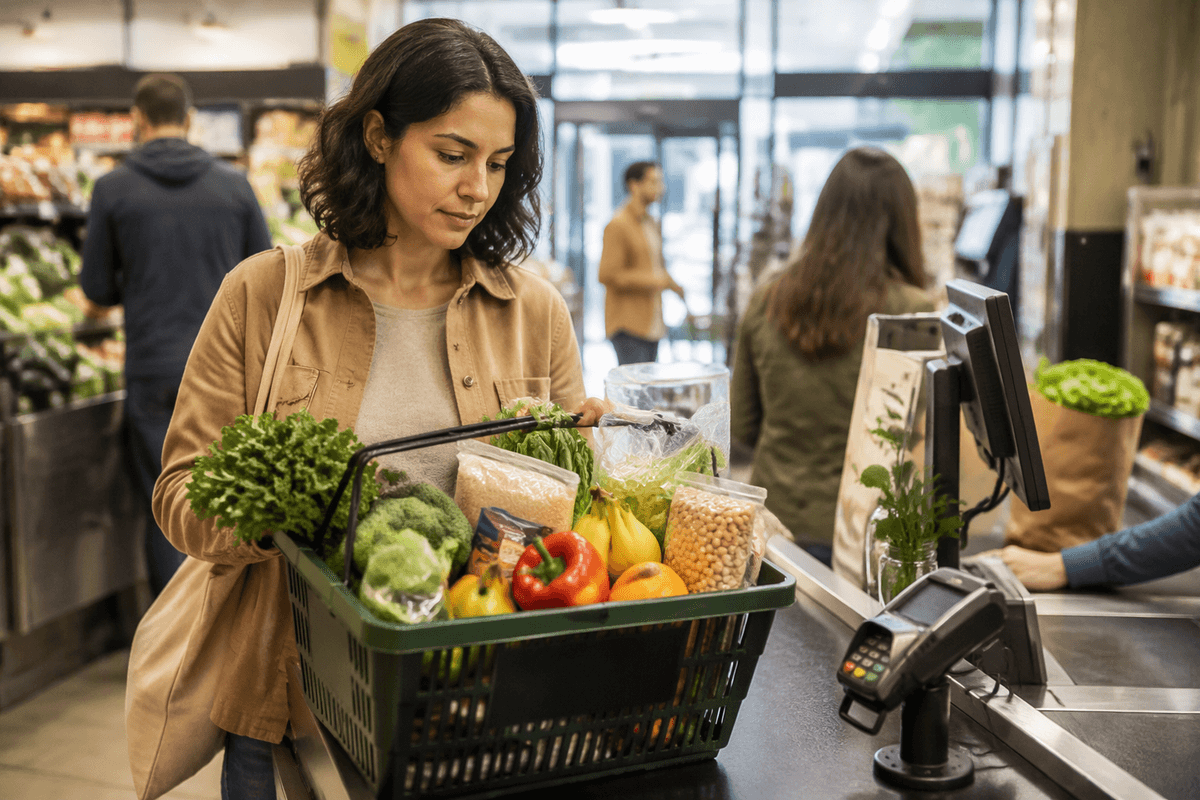
The trade-off often becomes clearest at the checkout counter. Organic staples can cost more, and the difference may be manageable for one or two foods but difficult to sustain across an entire grocery list. If higher prices lead someone to buy less produce, rely more on highly processed convenience foods, or abandon the effort after a few weeks, the practical benefit may be smaller than expected. Consistency matters because a short period of lower residue exposure cannot be treated as equivalent to a stable pattern maintained over many years.
Budget and availability also create uneven choices. Some shoppers may prioritize foods they eat most often, while others may find that frozen, canned, or conventionally grown options make it easier to keep vegetables, fruit, beans, and whole grains in regular rotation. There is no clear reason to treat an occasional conventional purchase as a failure, especially when the alternative is skipping the food entirely. Organic buying may fit best when it remains affordable and routine without crowding out the broader eating habits that have stronger practical importance.
Where Organic Choices May Fit Best
The best fit may be less dramatic than a complete kitchen overhaul. For someone who regularly eats a particular fruit, vegetable, or grain and prefers organic versions, choosing them can be a manageable way to reduce contact with some pesticide residues without changing the rest of the routine. The benefit is clearest as an exposure decision, not as evidence that the food will independently prevent cancer.
That distinction matters when choices compete. Organic options may be reasonable for foods eaten often, foods where residue concerns feel especially important, or products that fit comfortably within the household budget. They may fit less well when the price leads to fewer plant foods, less dietary variety, or more reliance on processed alternatives. Availability and personal comfort also differ, so there is no single priority list that works for everyone. A useful approach is to let organic choices occupy a limited, sustainable place within regular meals, rather than making the label the main measure of how protective the overall diet is.
A More Realistic View Of Cancer Prevention
It can be tempting to look for one purchase that makes future cancer risk feel more manageable. Organic food may change exposure to some pesticide residues, but it cannot establish how an individual’s cancer risk will unfold. That uncertainty is not a reason to dismiss the choice; it is a reason to keep its role proportionate. The label describes a farming method, not a complete health profile or a guarantee about long-term outcomes.
A more realistic view places organic foods alongside the patterns that are easier to evaluate in daily life: eating a varied diet with plenty of plant foods, limiting processed meat and excess alcohol, staying active, and keeping up with appropriate preventive care. Those habits are not always simple or consistent, and they do not remove risk either. They can, however, provide a broader foundation than any single label. Organic choices may support that foundation when they are affordable and sustainable, but they work best as one practical preference rather than the central measure of cancer prevention.