What Plant-Based Meats Actually Replace
At dinner, the package may seem to answer a simple question: is this burger a reasonable stand-in for beef, chicken, or another familiar protein? In practice, it replaces more than a shape on the plate. Depending on the product, it may provide a similar amount of protein, but very different calories, fiber, iron, sodium, calcium, or vitamin D. Some are fortified; others contribute little beyond protein and texture.
That difference matters because teenagers rarely eat the substitute in isolation. A plant-based patty might replace a nutrient-dense meal, or it might be served with beans, whole grains, vegetables, dairy or fortified alternatives, and enough overall energy for growth. The same label can therefore fit into very different eating patterns. Weight changes, slower growth, fatigue, or repeated injuries cannot be reasonably attributed to the product alone without considering the wider pattern, including appetite, activity, meal consistency, and ongoing development.
Puberty Depends on More Than Protein
The teenager may be eating a plant-based burger regularly and still be meeting protein needs, yet puberty does not run on protein alone. Growth also depends on sufficient overall energy, iron, zinc, calcium, vitamin D, sleep, activity, and the body’s broader developmental pattern. If meals become smaller, less consistent, or heavily centered on low-calorie substitutes, the concern may be inadequate intake rather than the plant-based product itself. On the other hand, a calorie-dense product eaten with regular meals may add substantial energy without improving the balance of nutrients.
This is where interpretation becomes difficult. Appetite often changes during adolescence, activity can vary sharply between school days and sports seasons, and development does not proceed at the same pace for every teenager. A later growth spurt or changing body shape may therefore be noticed around the same time that a family adopts more meat alternatives, without one clearly causing the other. The label can help show what the product contributes, but it cannot indicate whether the teenager is eating enough across the day or whether other foods are covering the gaps.
How Body Weight May Shift Over Time

A scale can move in either direction after a teenager begins eating plant-based meats more often, and the change may not be obvious at first. Some products are lower in calories than the foods they replace, especially when they are eaten with vegetables or whole grains. Others contain enough added oil, breading, or sauce to make the meal more energy-dense than expected. If appetite, sports activity, or portion sizes change at the same time, body weight may gradually rise or fall without the substitute being the main cause.
Short-term fluctuations can also reflect water, sodium, digestion, or normal growth rather than a meaningful change in body composition. A teenager who is growing taller may appear leaner even while gaining weight, while another may gain weight during a period of reduced activity or increased appetite. The practical question is whether meals remain regular and satisfying, with enough energy and variety to support development. Because growth is uneven and home measurements are imperfect, one isolated weigh-in usually says less than the pattern across several months.
Nutrient Gaps Can Hide Behind Substitution
At first, the meal may look complete: a plant-based patty, bun, and a side dish. Yet substitution can quietly remove nutrients that were once supplied by the original meal. A product may offer useful protein and sometimes iron or vitamin B12 through fortification, while contributing little calcium or vitamin D. If it also replaces beans, lentils, eggs, dairy, or fortified alternatives, the overall pattern may become less varied than the label suggests. Fiber can rise with some choices, but sodium may also increase, especially when several packaged foods appear in the same day.
These gaps rarely produce a clear signal right away. A teenager may feel well, maintain a familiar weight, and still have meals that are inconsistent in calcium, iron, or total energy. Needs can also change with sports participation, menstrual blood loss, appetite, and growth rate. Checking the nutrition label alongside the rest of the day’s food is more informative than judging the patty alone. Even then, intake estimates are imperfect, and one unusual week should not be treated as proof that substitution has affected development or bone strength.
Bone Strength Reflects Several Interacting Inputs
A sore shin after practice or a small fracture from an ordinary fall can make the family focus immediately on the plant-based burger in the fridge. Bone strength, however, reflects several inputs working together: calcium and vitamin D intake, overall energy, protein, weight-bearing activity, hormones, sleep, and the normal pace of growth. A substitute may contribute calcium or vitamin D if it is fortified, but many products provide little of either. The same meal may also be low in these nutrients if it replaces dairy, fortified soy foods, beans, or other varied options.
Activity adds another layer of uncertainty. Regular jumping, running, and resistance exercise can support bone development, while very high training loads combined with inadequate food may create a less favorable pattern. Menstrual changes, repeated pain, or injuries deserve attention, but they do not establish that one packaged food caused the problem. Looking at the teenager’s usual meals, beverage choices, training demands, and growth pattern gives a more useful picture than treating the product as a direct explanation. Even careful review has limits because bone changes develop gradually and are not easily judged from symptoms alone.
Processing Changes the Meaning of Healthier
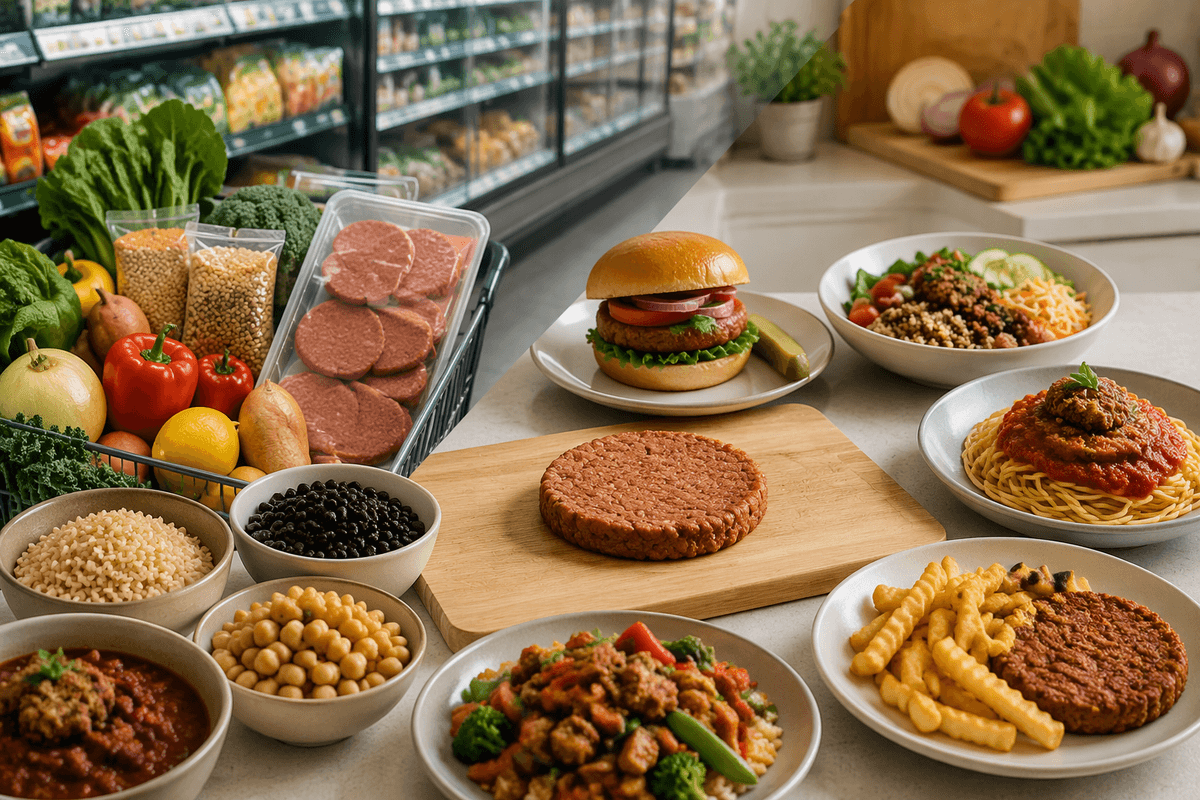
The word “healthier” can become misleading when it describes the product rather than the meal. A plant-based patty may contain more fiber or less saturated fat than the meat it replaces, yet still be high in sodium, heavily refined, or low in calcium and vitamin D. Processing is not automatically a problem, but it changes what the food contributes. A fortified product may help cover iron or vitamin B12 needs, while another mainly supplies flavor, protein, and calories.
This makes comparisons less straightforward than a front-of-package claim suggests. A teenager eating the patty with beans, vegetables, whole grains, and a fortified beverage has a different nutrient pattern from one eating it with fries and other packaged foods. Taste, convenience, cost, and tolerance for unfamiliar foods also affect how consistently meals are eaten. The “processed” does not reveal whether the overall diet is adequate, and “plant-based” does not guarantee a favorable balance. The useful question is what the product adds, what it replaces, and how often that exchange occurs.
Reading the Evidence Without Overinterpreting It
After reading a study or noticing a change at home, it can be tempting to connect the two immediately: more plant-based meats, then weight gain, delayed puberty, fatigue, or an injury. Evidence rarely supports that kind of direct conclusion. Studies may differ in the products used, the teenagers included, how long they were followed, and what other foods they ate. A reported association can point to a pattern worth noticing without proving that the product caused it.
A more useful review asks what changed across the whole routine. Are meals regular and sufficient? Does the teenager receive reliable sources of calcium, vitamin D, iron, and protein? Have training, sleep, appetite, or growth rate shifted? These questions cannot explain every change, and home observations are often incomplete, but they reduce the risk of blaming one food for a complex process. Plant-based meats may fit comfortably into a varied diet, or they may repeatedly displace foods that were contributing important nutrients. The meaning depends on that pattern over time.