What Taking Too Much GLP-1 Can Mean
It can start with a small doubt: was that injection due today, or was it taken a few days ago? With GLP-1 medicines, “too much” does not always mean a dramatic single overdose. It may mean an extra weekly dose, two doses placed too close together, or more medication drawn from a vial than intended because syringe units were mistaken for the prescribed amount.
Because these medicines can remain active for days, the effects of a mix-up may not be obvious right away. A one-time error may cause little or no noticeable change in some people, while repeated overlap or a larger-than-planned amount can make the medication’s usual effects feel stronger over time. Nausea, early fullness, vomiting, and difficulty keeping up with fluids can become more disruptive than the adjustment symptoms someone expected when starting or increasing a dose. The uncertainty is often greatest with compounded vials, where the number of “units” on a syringe does not automatically tell you how much medication was taken.
Digestive Symptoms Often Lead the Early Picture
The first clue is often not a number on the syringe but a meal that suddenly feels hard to finish. Nausea, early fullness, bloating, belching, constipation, loose stools, or vomiting may appear before someone realizes an extra dose or closely spaced doses could be involved. These effects can also happen during ordinary treatment, especially after a dose increase, so symptoms alone cannot confirm that too much medication was taken.
What tends to matter is the change from that person’s usual pattern. Mild nausea that settles may feel familiar; nausea that keeps building, vomiting after small amounts of food, or an inability to drink enough can be a different experience. It is easy to dismiss this as a normal adjustment or a stomach bug, particularly when the injection mistake was uncertain. But compounded semaglutide dosing errors reported to the FDA have included gastrointestinal symptoms such as nausea, vomiting, abdominal pain, and dehydration.
Slower Stomach Emptying Can Amplify Discomfort

A few bites can then sit heavily in a way that feels out of proportion to the meal. GLP-1 medicines slow the movement of food from the stomach into the intestine, which is part of why appetite may drop and fullness can arrive early. When an extra dose, a closely timed dose, or a larger-than-intended amount adds to the medication already in the body, that slowing may make ordinary nausea feel more persistent. Food, fluids, and even usual oral medicines may seem harder to tolerate for a time.
This does not mean every episode of fullness signals a dosing problem. A large meal, constipation, a recent dose increase, or an unrelated illness can produce a similar feeling. The more concerning pattern is discomfort that does not ease between meals: repeated vomiting, increasing abdominal fullness, or drinking so little that weakness, dizziness, or very dark urine follows. At that point, the issue is less about pinpointing exactly which injection caused it and more about the strain from poor intake and fluid loss.
Low Blood Sugar Depends on Other Medicines
The shaky, sweaty spell can be easy to misread after a day of nausea and very little food. GLP-1 medicines on their own are less likely to cause low blood sugar because their effect on insulin is tied to blood glucose levels. The picture changes when they are used alongside insulin or medicines that push the pancreas to release insulin, such as sulfonylureas. In that setting, an extra or closely timed GLP-1 dose may add another layer of uncertainty, particularly if meals have become smaller or are being skipped.
Symptoms can include trembling, sweating, hunger, headache, dizziness, confusion, or an unusual sense of weakness, but they can overlap with dehydration and poor intake. A glucose check, for someone who has a meter or continuous monitor, can help separate a low reading from a similar-feeling stomach-related slump. The important detail is not simply whether a GLP-1 injection was mixed up, but what other glucose-lowering medicines are still active and whether food has been hard to keep down.
Weekly Dosing Mistakes Create Particular Uncertainty
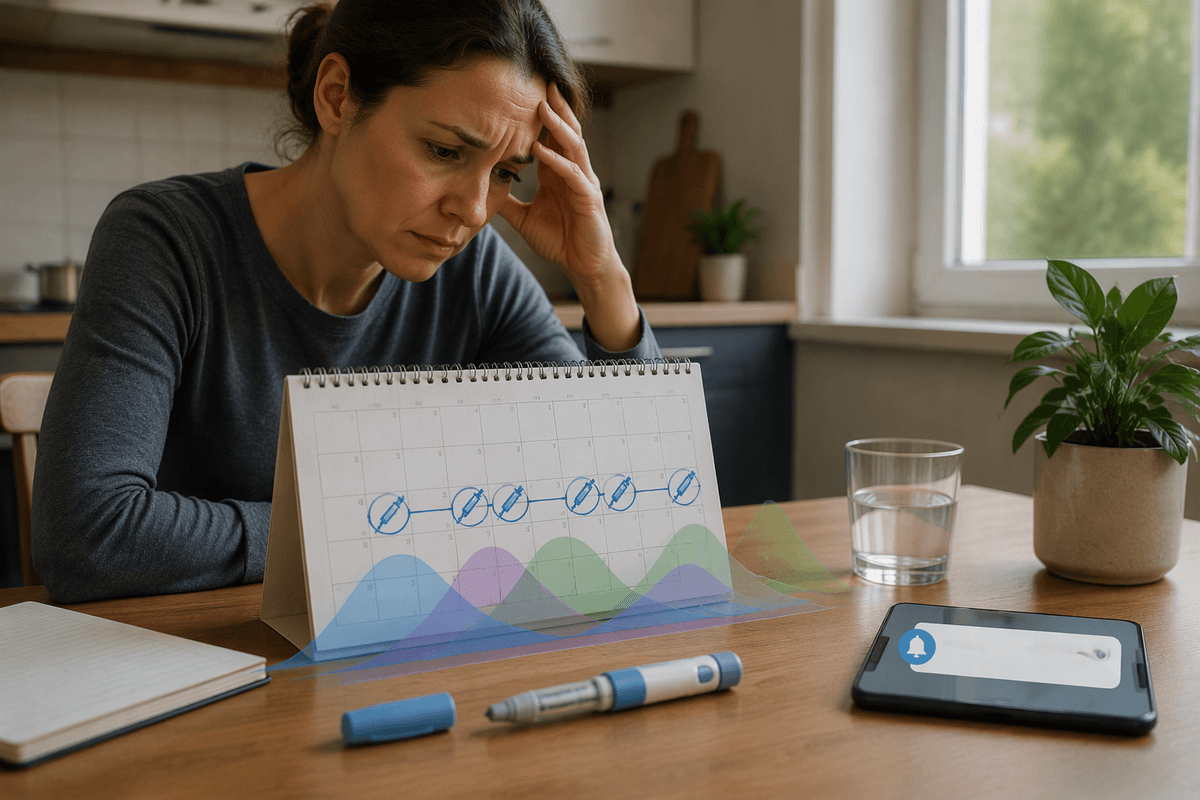
The calendar can be the source of the mistake. A person may inject early after forgetting the prior dose, see a reminder and take it again, or assume that a missed weekly dose should be made up immediately. Unlike a daily medicine, a GLP-1 injection is still working when the next few days pass, so two doses taken close together can overlap even if neither injection seemed unusually large on its own. The uncertainty can be especially uncomfortable when nausea begins later, after the timing error has already faded from memory.
Vials add another point of confusion. “Units” on an insulin syringe measure volume, not automatically the amount of GLP-1 medication prescribed; the correct number can differ with the vial’s concentration. A one-time mix-up does not always lead to severe symptoms, but repeated early doses, a dose increase taken too soon, or drawing more than intended may raise exposure over several days. Persistent vomiting, poor fluid intake, or unusual weakness should not be treated as a routine scheduling problem.
Some Symptoms Need Prompt Medical Assessment
It may become clear only when standing up feels unusually difficult or a sip of water will not stay down. Repeated vomiting, worsening or severe abdominal pain, fainting, confusion, trouble staying awake, or signs of significant dehydration—such as very little urine, marked dizziness, or an unusually fast heartbeat—need prompt medical assessment. These are not symptoms to simply wait out because the amount injected is uncertain.
Someone using insulin or a sulfonylurea should take shakiness, sweating, confusion, or severe weakness especially seriously, since low blood sugar may be part of the picture. If an extra dose or a vial-measurement error may have occurred, contacting the prescribing clinician or Poison Control can help clarify the immediate risk rather than guessing from symptoms alone. In the United States, Poison Control is available at 1-800-222-1222; emergency care is appropriate for collapse, seizure, breathing difficulty, or inability to wake the person.
The Next Step Depends on Dose and Symptoms
Once the immediate worry settles, the useful question is usually not “Was it definitely too much?” but “What was taken, when, and how is the person feeling now?” Writing down the product name, prescribed dose, vial concentration if relevant, syringe markings, and injection dates can make a call to the prescriber, pharmacist, or Poison Control far more useful. It also helps avoid a second dose being taken while the first is still being sorted out.
For mild symptoms that are improving and a possible one-time mix-up, the next step may simply be individualized guidance on when to resume the schedule. That answer can differ between products, doses, and other diabetes medicines, so guessing from a calendar or online advice can create another overlap. If vomiting continues, fluids are difficult to keep down, weakness is unusual, or blood sugar symptoms appear, the situation deserves more immediate assessment rather than waiting for the medication to wear off.