The real choice: speed, freedom, or simplicity
I froze at Roma Termini with my backpack half-zipped, staring at a kiosk that offered “Super Economy” in tiny text and a line of people who already knew what they were doing. The Frecciarossa to Florence was 1h30-ish on paper, but the clock said 08:47 and I could feel the day slipping. Buying the faster option felt like paying for confidence, not just minutes.
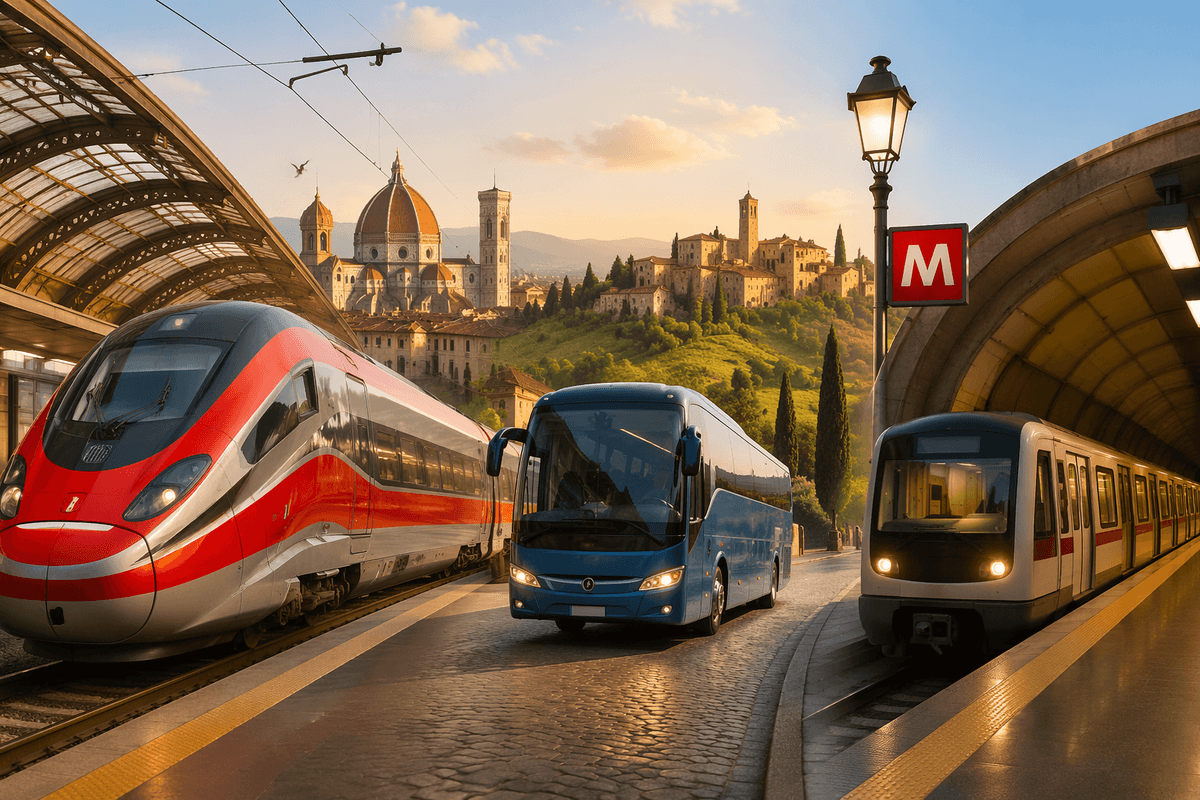
That’s the real choice you’re making in Italy: speed, freedom, or simplicity—and you rarely get all three at once. High-speed trains win when cities are the point (Rome–Florence–Venice), because they’re usually center-to-center and spare you the slow churn of highway traffic and peripheral bus terminals. The cheapest fares tend to reward early booking and punish spontaneity, and disruptions (including strikes) can turn “fast” into “complicated” if you’re relying on a tight connection.
Buses and regional trains buy you freedom when you want a hill town, a winery stop, or lodging that isn’t right by a station—but they’ll charge in other currencies: more waiting, less luggage comfort, and more rules to remember. Metro and city buses are simple when you’re moving within Rome or Milan, yet they don’t solve the last-mile in smaller places where “five minutes” becomes a sweaty 20-minute uphill walk. If you’re choosing between two imperfect options, pick the one that protects your most expensive resource that day: time, flexibility, or mental bandwidth.
Start with your route and distances
On my phone map, Rome–Florence looked like a neat diagonal line, but the “2h 55m” car estimate hid the ugly parts: city exits, toll lanes, and a parking garage that didn’t want my credit card. Standing outside my Airbnb near Trastevere at 07:10, I realized the real distance wasn’t kilometers—it was doors and deadlines. The question became whether I was measuring center-to-center or station-to-station.
For a 10-day Rome–Florence–Venice loop, draw your route in segments and time them like you’ll actually travel: apartment → station (with luggage), station → platform (buffer), ride time, then station → hotel. On paper, a bus can look “only 30 minutes slower,” but it often lands you farther from where you want to be, with fewer departures if you miss one. High-speed trains tend to win once the total trip is pushing past ~90 minutes and you’re moving between big-city cores; the trade-off is that the best fares usually require committing early, and changes can get fiddly.
Day trips to a hill town flip the math. A regional train plus local bus might be cheaper and more frequent than a single perfect train, yet the connection is the fragile part—miss it and you can lose an hour to gaps in service. If you’re planning one “small place” day, pick the town based on the timetable you can actually live with, not the postcard you like most.
Pick trains for intercity efficiency
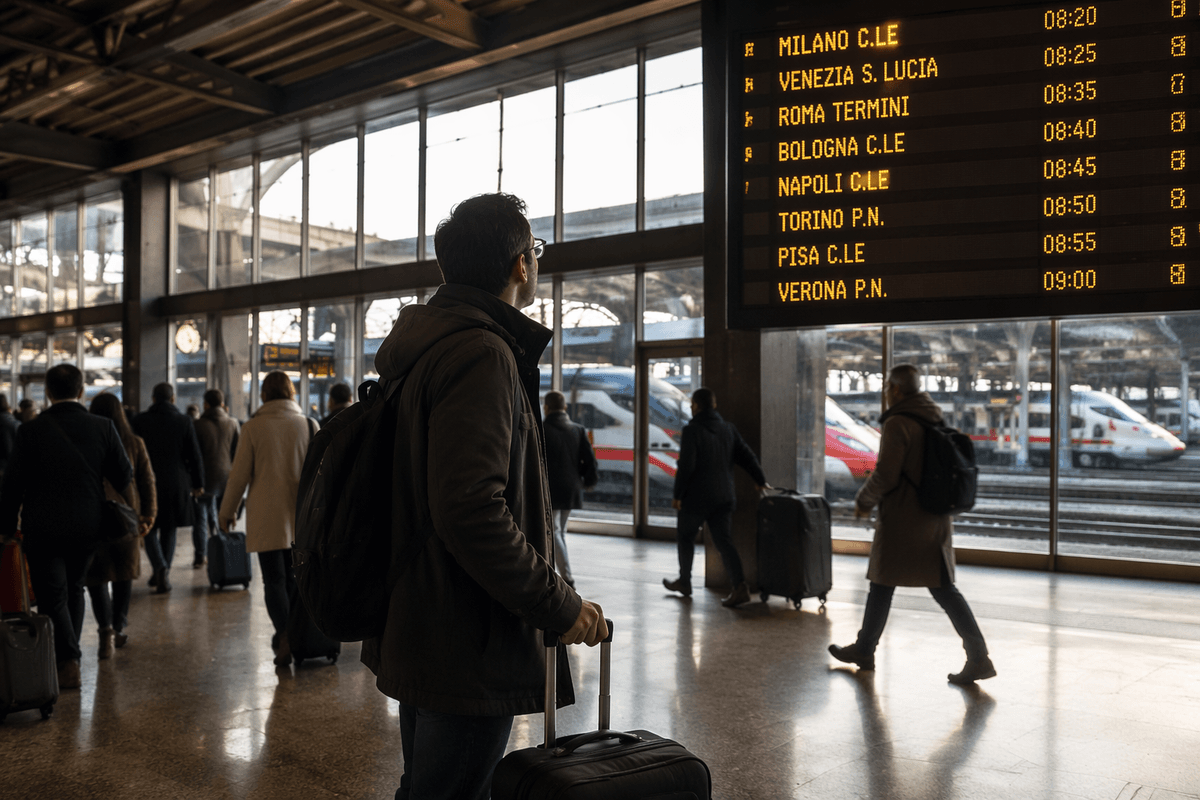
At Firenze Santa Maria Novella, I hesitated at the departure board because “Venezia S. Lucia” was right there—clean, direct, and soon—while the cheaper regional option involved a change and a tighter platform hop with my bag. I’d told myself I was being flexible, but at 09:18, flexibility looked a lot like volunteering for a missed connection. The station felt designed for throughput, and I wasn’t moving fast.
For Rome–Florence–Venice, trains are the closest thing Italy has to an “easy mode” for intercity travel: city-center stations, predictable ride times, and no highway randomness. High-speed (Frecciarossa/Frecciargento/Italo) is usually the time saver that actually shows up in real life, especially if you’re traveling on a weekend or around check-in hours when roads and bus terminals clog. The trade-off is price and commitment—advance fares can be great, but the cheapest tickets can be restrictive to change, which matters if you don’t want your whole day anchored to one departure.
Regionale trains work best when you care more about cost than timing, or when you’re doing shorter hops where high-speed doesn’t buy much. They’re also where rules feel more fiddly: some tickets need validation, and missed connections can sting because frequency drops outside the main corridors. If you’re carrying luggage and hate hassle, paying extra for a direct high-speed seat is often less about luxury and more about keeping your day intact.
Use buses when trains don’t fit
At 16:40 in Siena’s Piazza Gramsci, I watched my “easy” return plan dissolve: the bus back to Florence was on a stand I couldn’t find, and the next train option meant a taxi to a small station outside town. On the map, it was all lines and dots; on the ground, it was stairs, heat, and five minutes of doubt with a backpack cutting into my shoulder. That’s when buses stopped feeling like the “slow” choice and started feeling like the only choice.
Buses earn their keep when the train doesn’t land where you’re actually going. Hill towns (Siena, San Gimignano area, parts of Chianti) often have a bus stop closer to the center than any station, which can save you the last-mile slog even if the ride itself is longer. The trade-off is schedule fragility: miss a departure and you can wait 40–90 minutes, especially outside commuter peaks, and highway traffic can quietly steal the “I’ll be there by dinner” buffer.
Ticket rules are usually simpler than regional trains—often a kiosk, a tabacchi, or an app—but boarding can be more chaotic when a coach shows up half-full and everyone funnels through one door. If you hate standing with luggage, aim for earlier buses and avoid tight same-day connections; if you’re prioritizing flexibility over precision, buses are the best patch for the gaps trains don’t cover.
Rely on metro for big-city moves
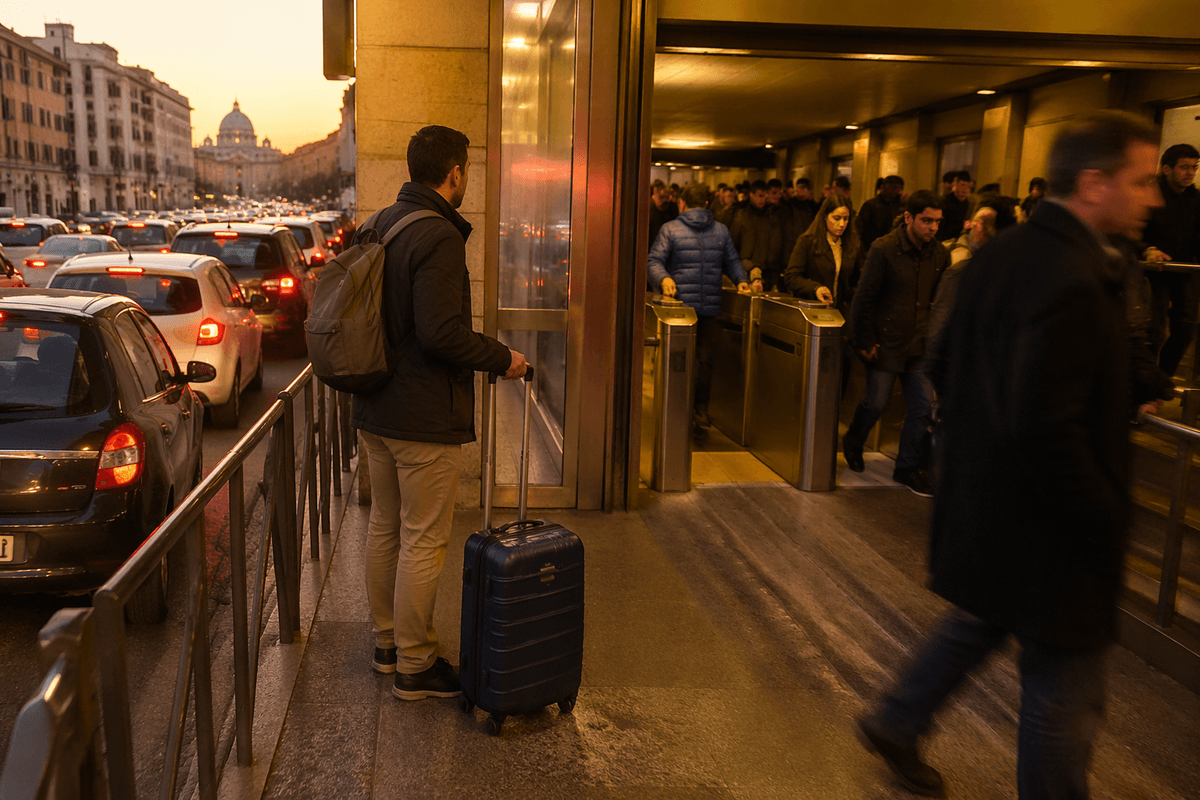
At 18:12 outside Ottaviano, I hesitated at the metro entrance with my small suitcase, watching a wave of commuters squeeze through the turnstiles. A taxi would’ve been one clean transaction, but the street traffic barely moved, and the quoted fare felt like paying to sit still. I bought the ticket anyway, then immediately had to pick the right direction in a station that looked obvious until it didn’t.
In Rome (and Milan, if it’s on your radar), metro is the fastest way to shrink the city when you’re doing “big moves”: Termini to a neighborhood, a museum day that hops across town, or getting to the train station without gambling on traffic. The trade-off is comfort and simplicity with luggage—elevators aren’t guaranteed, platforms can be crowded at rush hour, and the last 8–12 minutes is often a walk that feels longer in July heat. It works best if you’re traveling light and leaving a buffer; it works poorly if you’re hauling a hard-shell suitcase at 08:30.
Venice is the exception that proves the rule: no metro, and your “urban transit” becomes vaporetto plus walking, which is slower but more direct to where you’ll actually stay. In Florence, you’ll mostly walk; the city is compact enough that a bus can save time only when you’re tired or crossing the Arno repeatedly. If your priority is avoiding ticket hassles, keep city transit boring: use contactless where it’s supported, avoid ultra-tight museum entry times after a cross-town ride, and treat strikes as a reason to walk sooner—not panic later.
What I’d choose for a first Italy trip
On my second morning, I found myself at 07:32 with a cappuccino going cold, re-checking a Florence-to-Venice departure I’d already bought because the app showed a different platform than the board. It wasn’t panic, exactly—more the feeling that I’d traded “freedom” for a plan I now had to protect. With 10 days and a solo brain, I wanted fewer moving parts than my instincts usually demand.
For a first Italy loop (Rome–Florence–Venice plus one hill town), I’d pre-book the high-speed legs as soon as your lodging dates are real: Rome→Florence and Florence→Venice (or the reverse). It’s the cleanest center-to-center time saver, and it lowers your exposure to station friction—changes, validations, and “is this the right train?” moments—at the exact points where you’re most likely to be hauling luggage. The trade-off is commitment, so I’d avoid ultra-cheap fares that turn a missed departure into an expensive reset.
I’d keep the hill town day deliberately looser: choose the place whose timetable gives you multiple return options, even if it’s less “perfect” on Instagram. If the bus drops you closer to the center, I’d take the longer ride over the last-mile slog from a rural station—especially in heat. Inside cities, I’d use metro to protect mornings and train-station runs, then walk when the network starts costing more mental bandwidth than time. If you’re torn, buy reliability on travel days, and buy flexibility on sightseeing days.