Planning Athens Beyond the Acropolis
Athens has far more to offer than its most famous ancient landmark, but fitting the city into two to four days requires some decisions about pace and priorities. The Acropolis and its surrounding archaeological sites can easily occupy much of a morning, particularly when time is set aside for museum exhibits, panoramic views, and the history behind the ruins. Nearby neighborhoods such as Plaka and Monastiraki provide a natural continuation, with narrow streets, traditional tavernas, small shops, and lively squares that reveal a different side of the city. Grouping these experiences together reduces unnecessary travel and leaves more energy for exploring on foot, even if it means leaving a less essential monument for another visit.
The best itinerary depends on whether ancient history, affordable sightseeing, or a slower introduction to local life matters most. Visitors interested in archaeology may prefer to devote more time to major sites and museums, while those seeking a relaxed experience may enjoy combining one landmark with a neighborhood walk and a long lunch. Starting early helps avoid some of the midday heat and busiest visiting periods, although opening hours, ticket arrangements, and seasonal conditions still need checking in advance. Later in the day, neighborhood streets and outdoor cafés offer a pleasant change of pace, but tired legs and closing times can limit further sightseeing. Building each day around one main attraction and nearby places creates a useful balance between historical depth and everyday Athens, without turning a short visit into a race across the city.
Prioritize Athens’ Essential Ancient Sites
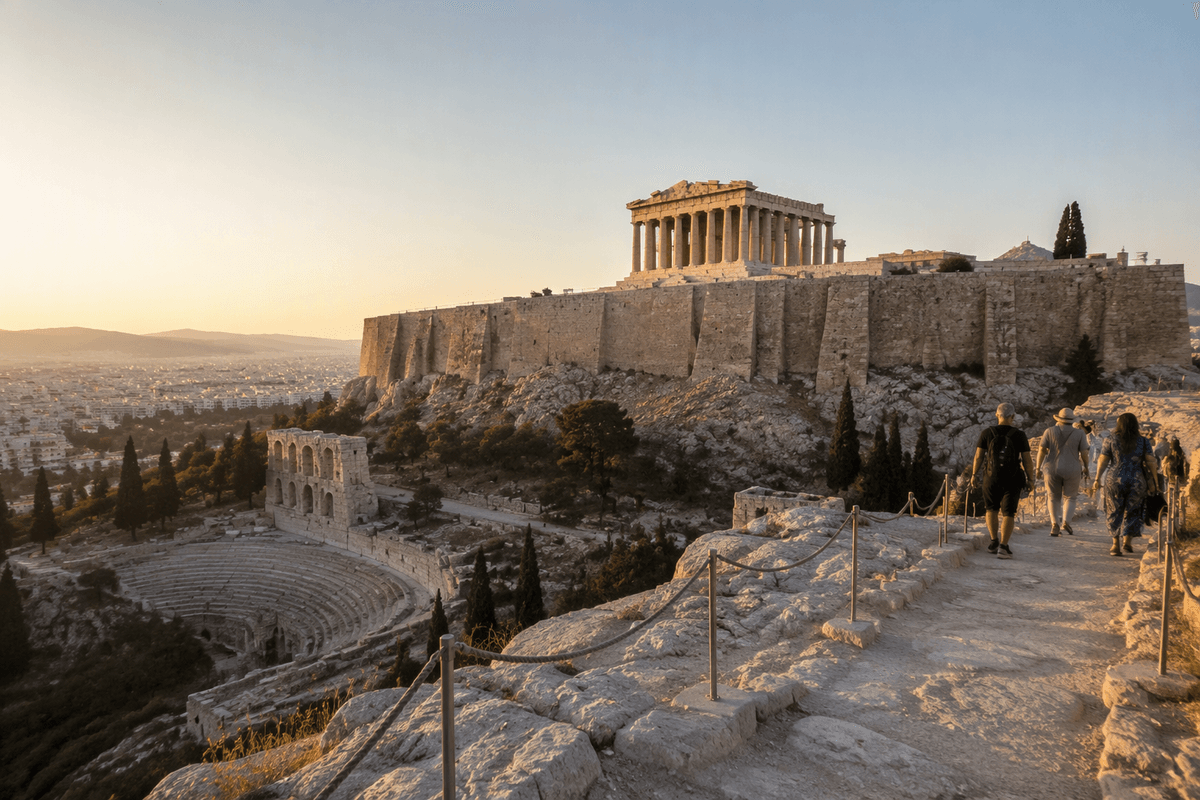
For a first visit, the Acropolis deserves the earliest time slot, when the light is softer and the exposed paths are more manageable. Add the Acropolis Museum only if you want context and indoor recovery; it improves understanding but can turn a short morning into a half-day commitment. If your energy is limited, the South Slope and Theatre of Dionysus provide useful depth without requiring another major cross-city journey.
The Ancient Agora is the strongest companion site: it is close enough to reach on foot, more spacious than the Acropolis, and easier to combine with Monastiraki afterward. The Roman Agora is convenient but comparatively brief, so it works best as an add-on rather than a destination. A multi-site ticket may offer value if you plan several ruins, but paying separately can be smarter when heat, crowds, or fatigue make a shorter archaeological day more realistic.
Walk Plaka, Anafiotika, and Monastiraki
After the Ancient Agora, continue toward Monastiraki rather than doubling back. The route is compact, but the experience changes quickly: Plaka is easier for a first orientation, with shaded lanes, cafés, and souvenir shops, while Anafiotika feels quieter and more distinctive beneath the Acropolis. Its steep, uneven steps are rewarding in cooler weather but tiring after a morning on exposed ruins, so treat it as a short detour rather than a separate destination.
Monastiraki works best later, when the square and flea-market streets become livelier, though crowds and restaurant pricing can rise with them. It is a practical place to stop for lunch or coffee, but not always the calmest one. For a slower walk, stay on Plaka’s side streets; for atmosphere and people-watching, finish in Monastiraki. This combination gives you variety without adding much transport, provided you avoid the hottest part of the afternoon.
Explore Psyrri, Koukaki, and Exarchia
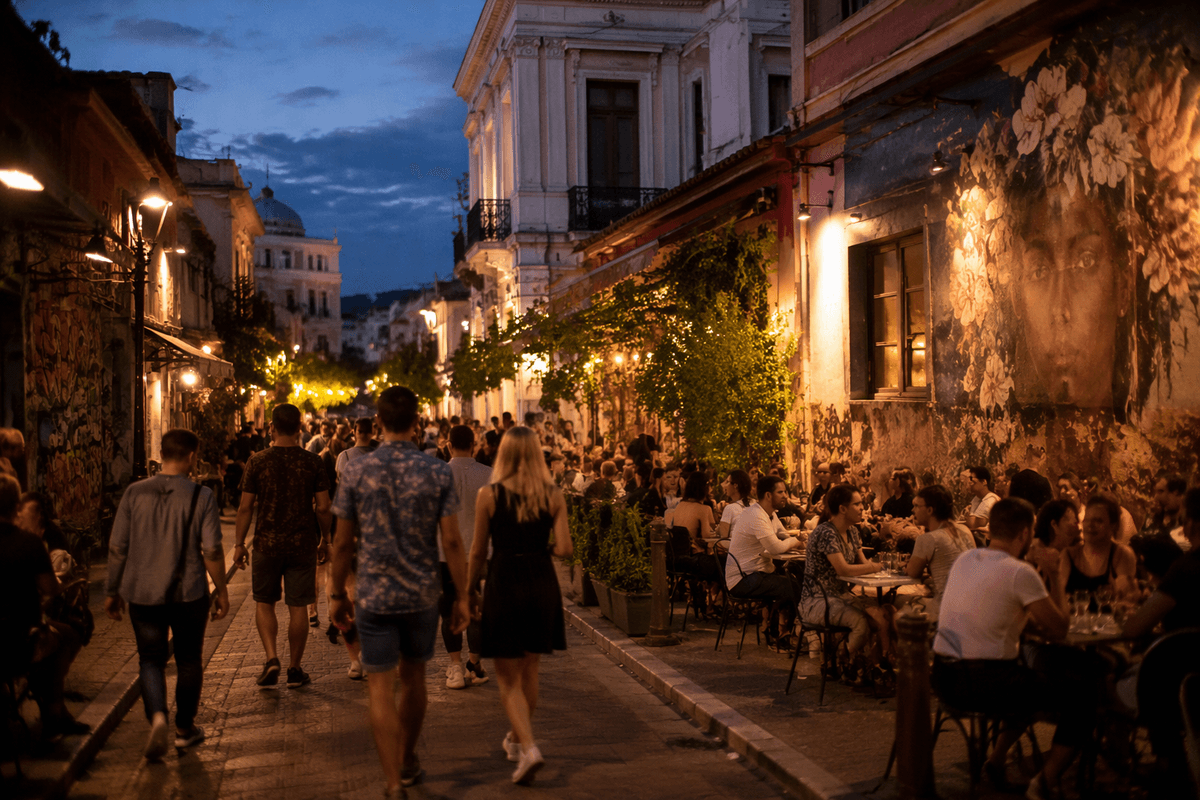
When Monastiraki feels too crowded, Psyrri is the easiest nearby adjustment. Its narrow streets, street art, bars, and tavernas make it better for an evening wander than a quiet midday break, and prices can rise on the busiest restaurant lanes. It pairs naturally with the Ancient Agora or Roman Agora, but the neighborhood is more atmospheric than essential, so do not sacrifice a major site simply to fit it in.
Koukaki is the more practical choice after the Acropolis, especially if you want cafés, museums, and a less hectic base within walking distance. It is convenient, but the long approach from the archaeological sites can feel tiring in heat. Exarchia offers a sharper contrast—bookshops, independent cafés, and a livelier local edge—yet it works better as a separate evening outing than an extension of a monument-heavy day. Choose Psyrri for energy, Koukaki for recovery, and Exarchia when you still have walking capacity.
Plan Routes, Timing, and Practical Breaks
Route planning matters most once heat and opening hours begin competing with your ideal itinerary. Start with one timed archaeological visit, then keep the rest of the day within the same walking zone: Acropolis with Koukaki, Ancient Agora with Monastiraki and Psyrri, or a central site followed by Plaka. Crossing the city between stops usually costs more energy than it saves, especially when streets are busy and transport connections require extra walking.
Build in a real pause rather than treating lunch as another stop. A shaded café, museum break, or hotel reset can make an evening neighborhood walk possible, while skipping it often leads to an early finish. Check entrance times and weekly closures before committing to a multi-site ticket; flexibility is worth more than a small saving if temperatures rise or your morning runs late.
Build Your Ideal Athens Day
A workable Athens day usually has one clear anchor: an early Acropolis visit followed by Plaka or Koukaki, or the Ancient Agora followed by Monastiraki and Psyrri. The first option offers the strongest introduction but demands an earlier start and more recovery; the second is easier to pace and often feels more flexible.
Choose depth when the weather is mild and your energy is high, but choose atmosphere when heat, queues, or entrance costs make another monument feel excessive. The best itinerary is not the one with the most stops—it is the one that leaves enough time to sit, wander, and still enjoy Athens that evening.