Why skip Loch Ness and still win Highlands
I nearly locked in Loch Ness out of habit—then I mapped the drives and realized it would eat a full Highlands day for a lake you mostly view from lay-bys. If you’ve only got 4–5 Highlands days, the “must-do” can quietly become your main constraint.
Instead, pick your Highlands hits by payoff-per-mile: Glencoe (huge scenery, easy short hikes; works as a day trip or 1 night but parking can bottleneck), Glen Affric (quieter trails; best as a long day from Inverness/Beauly), the Cairngorms (villages + big plateaus; better as 1–2 nights to dodge weather whiplash), Assynt (otherworldly peaks; needs an overnight because the roads are slow), and Torridon/Applecross/Skye (iconic coast and mountains; stunning, but single-track and tour traffic can turn “short” drives into long ones).
The win is choosing 2–3 clusters, not chasing one headline stop.
Glencoe: cinematic valleys without the crowds
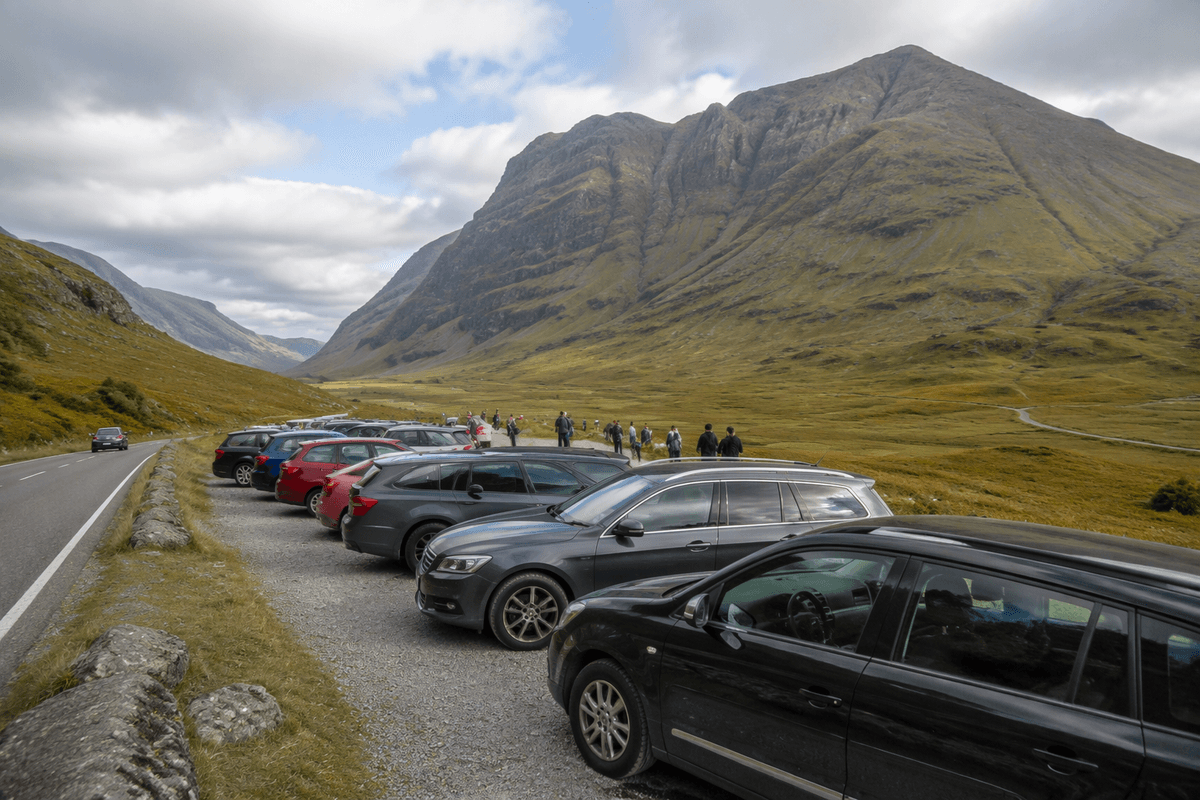
I noticed Glencoe working in my favor the moment I pulled off the A82 for a quick photo and realized it could have been the whole morning if I’d let it—parking, viewpoint hopping, and slow traffic add up fast here. The valley delivers that “Highlands, instantly” feeling (sheer walls, broad glen floor, weather doing its moody thing), but it’s also one of the easiest places to accidentally waste time circling for a space at the obvious stops.
If you want big scenery with short-hike effort, Glencoe is efficient: you can string together one proper walk and still keep the day flexible for weather. The choice is whether to treat it as a day trip (doable from Glasgow/Edinburgh if you accept a long drive bookending the best light) or give it one night nearby so you’re not racing the sunset. The “without the crowds” part is mostly about timing: early morning feels almost private, while midday can look quiet in photos but still feel clogged at lay-bys and trailheads.
I’d prioritize one or two stops you’ll actually get out of the car for—then move on—because Glencoe rewards depth more than a checklist, and the A82 doesn’t forgive indecision.
Glen Affric: wild glen for easy solitude
The first time I aimed for Glen Affric, the friction showed up before the scenery: it’s not “on the way” to anything, so you feel every extra mile on the map—and then again on the drive in. That’s also why it works. Compared with Glencoe’s constant roadside pull-offs, Affric makes you commit, and the payoff is a quieter, more immersive glen where you can walk for an hour and stop hearing engines.
For a first Highlands trip, I’d treat it as a long day trip from Inverness/Beauly (rather than trying to reshuffle your whole route around it). Plan on one main trail—forest to loch-side, or a simple out-and-back—because adding “just one more viewpoint” isn’t really a thing here. Car parks can fill on a rare blue-sky day, but most of the time the bigger constraint is weather: low cloud can flatten the drama, while light rain barely matters if you’ve brought proper layers. If you’re chasing solitude without committing to multi-day wilderness logistics, Affric hits that sweet spot.
Cairngorms: big landscapes, villages, and wildlife
I hesitated on the Cairngorms because they don’t “read” as dramatic from the road in the same instant way Glencoe does—then the weather proved the point: one hour it was clear enough to see a whole sweep of plateau, the next it was greyed-out and windy in a way that would’ve made a single rushed day feel like a misfire.
What works here is range. You can base yourself in Aviemore or around Braemar/Ballater and get both village convenience (food, supplies, a normal evening without hunting for the one open pub) and access to big, open landscapes that feel properly different from the west. The catch is commitment: the Cairngorms reward 1–2 nights because conditions change fast and some “short” walks are only short in distance, not in exposure—wind and low cloud can turn a casual plan into a damp retreat.
If wildlife is on your wish list, this is one of the better bets, but it’s not a zoo: you can do everything “right” and still see nothing but sheep. I found it helped to pick one grounded, lower-level option as a backup (forest or loch-side) so the day still lands even if the high ground disappears into weather.
Assynt: surreal mountains and empty coastal roads
I decided on Assynt the moment I realized the map was lying to me—in a normal country, that distance would be quick, but up here the roads narrow, twist, and politely refuse your schedule. It’s the most “otherworldly” pocket of the northwest (sharp, isolated peaks popping out of peat and lochans), but it’s also where you feel the Highlands’ scale in minutes, not miles.
This is the section I’d only recommend if you can give it an overnight, ideally around Lochinver, because trying to “dip in” from elsewhere turns into a long, slightly stressed loop. What works well is keeping the hiking modest: a short viewpoint walk or a low, rocky wander still delivers that surreal landscape without gambling on summit weather. The friction is real—single-track stretches, slow caravans, and fewer obvious places to grab food—so I’d treat Assynt as a destination day, not a filler between bigger names.
West Coast icons: Torridon, Applecross, and Skye
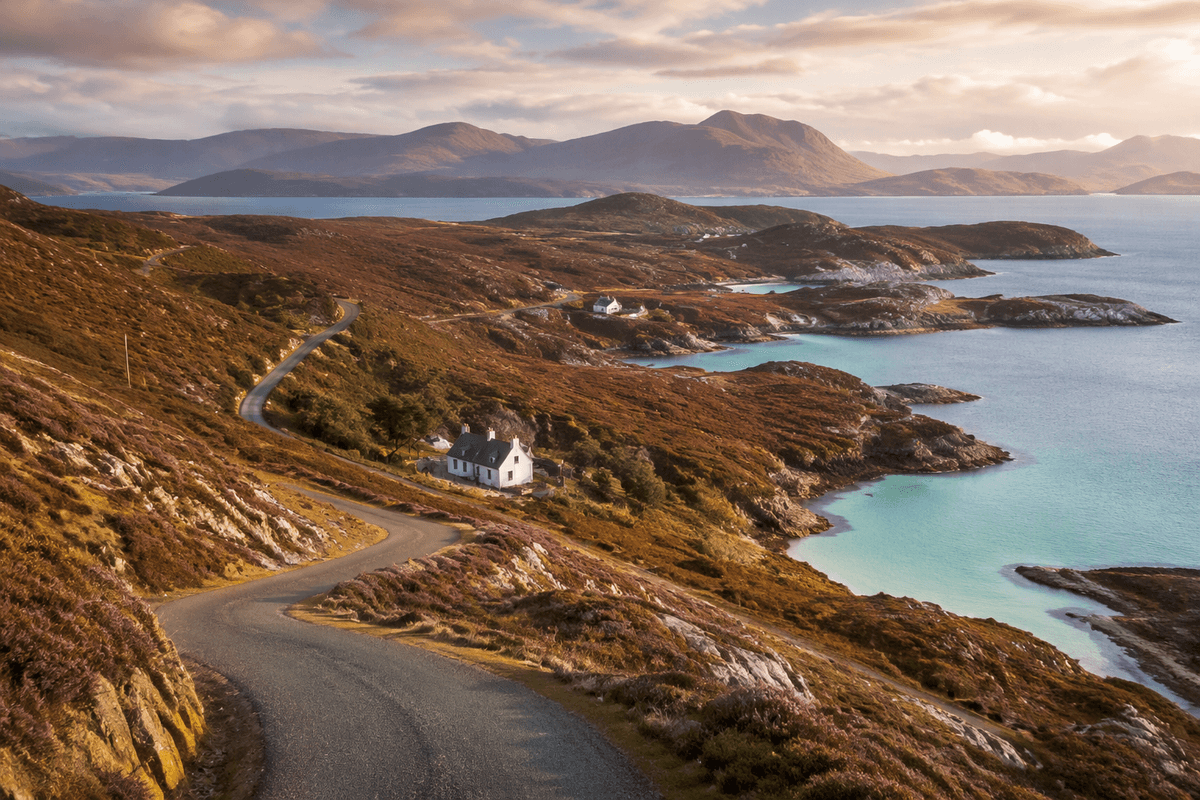
I hit my first single-track pinch point on the west coast when the sat-nav insisted a “25-minute hop” was normal—then I met a convoy of campervans and a sheep with no interest in yielding. Torridon, Applecross, and Skye absolutely deliver the postcard Highlands (mountains dropping into sea lochs, sudden light changes, short hikes that feel big), but they also punish over-ambitious routing more than any other cluster.
Torridon works best as an overnight if you want even one proper walk; trying to bolt it onto a longer transit day is where people end up only seeing it through the windscreen. Applecross is the more delicate decision: the coastal loop is gorgeous, but the famous mountain pass can be slow, weather-exposed, and stressful if you’re not comfortable with steep, narrow roads—so I’d only commit if you’ve got daylight buffer and a calm-weather forecast.
Skye is the easiest to “book” and the hardest to enjoy without strategy. If you can’t start early, pick one peninsula area and stick to it; otherwise you’ll spend your best hours in traffic and full car parks. The scenery still hits, but the experience depends on pacing, not ambition.
Choosing your Highlands mix: scenery, time, and pace
The planning moment that finally helped was admitting I couldn’t “win” every coastline and every glen in 4–5 Highlands days—so I chose a pace first, then the scenery. If you hate long driving days, anchor in two places (one west like Glencoe, one east like the Cairngorms) and treat everything else as a deliberate reach; you’ll see less map, but you’ll actually walk. If you love empty roads and don’t mind slower progress, swap the east for Assynt or Torridon and accept that single-track and weather buffers become part of the timetable.
My realistic takeaway: pick one crowd-magnet day (Skye or Glencoe), one quieter “commitment” day (Affric or Assynt), and leave one flex day for weather. The Highlands reward stubborn simplicity; they punish squeezing in “just one more stop.”